

As fresh winter white blankets the landscape of the Black Hills, seasonal adventures ramp up! A known destination for abundant outdoor adventures, the excitement doesn’t stop when the weather gets colder.
Frozen lakes shimmer beside pine‑covered hills, while the snow‑capped formations of Badlands National Park set the stage for unforgettable adventures.
Check out recommended outdoor activities, along with suggested trails, licensing information, and outdoor gear.
Snowmobiling
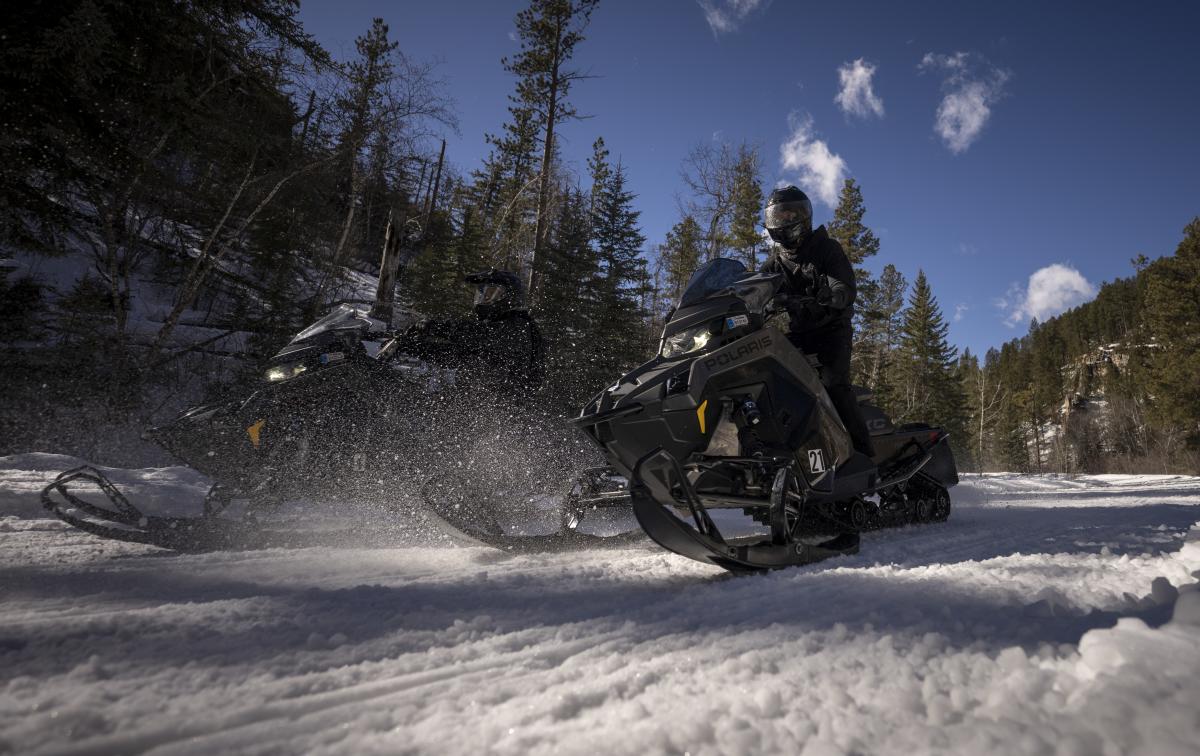
Snowmobiling trails are open December 15-March 31 and are ready for high-octane action! More than 400 miles of groomed trails and 1.2 million acres of off-trail riding is available in the Black Hills National Forest.
To learn more about trail permits, find riding maps, and other licensing and regulations for your own sled visit: gfp.sd.gov/snowmobiling.
If you don’t have your own sled, that’s ok! Rental companies throughout the region do have sleds to rent, helping you make those lasting memories.
For more information about the Wyoming Trails Program and licensing, visit wyoparks.gov.
Snowshoeing & Cross-Country Skiing
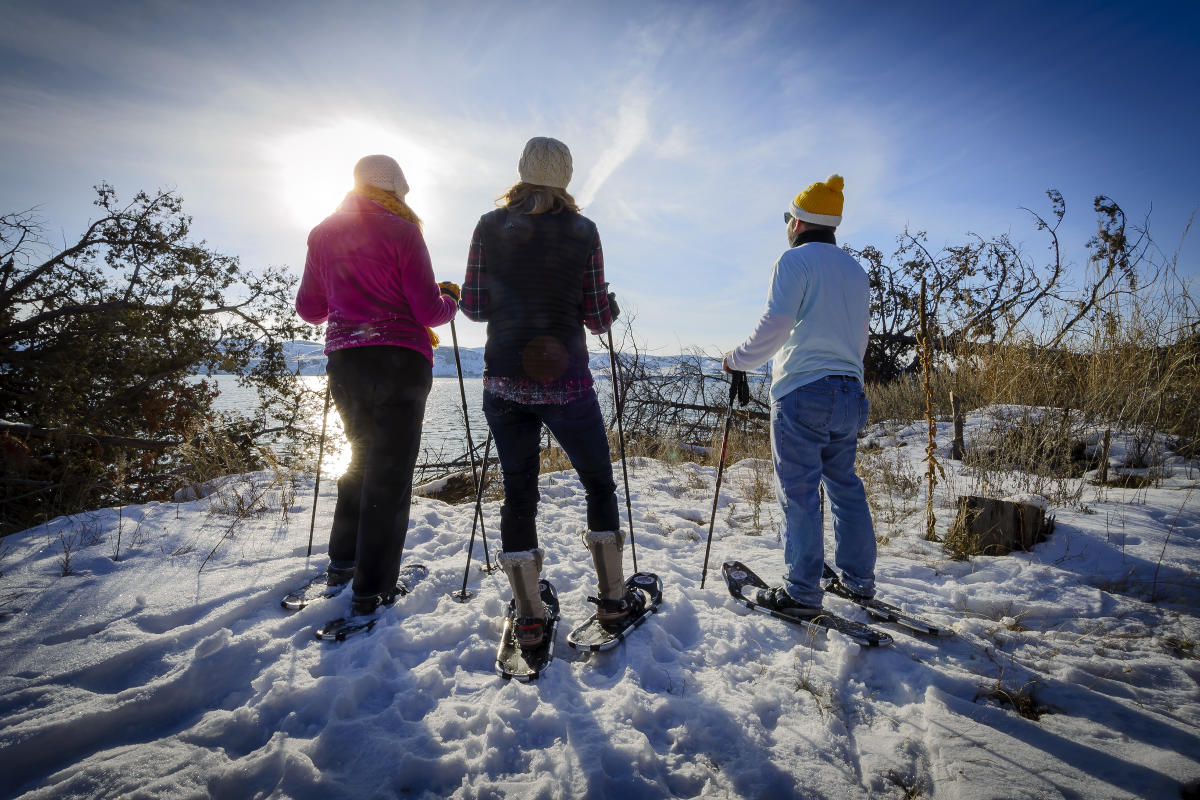
Wander the trails meandering through frozen pines to panoramic snow-dusted landscapes Nearly 60 miles of trails in the Black Hills National Forest are groomed for snowshoeing, and provide adventure for all skill levels.
Custer State Park and the Black Hills Trails Office offer free snowshoes to rent for a day or weekend with youth to adult sizing. Regional communities also offer spots to rent gear for a day on the trails.
We recommend Big Hill Trails or Eagle Cliff Trails near Spearfish in the Northern Black Hills.
Ice fishing
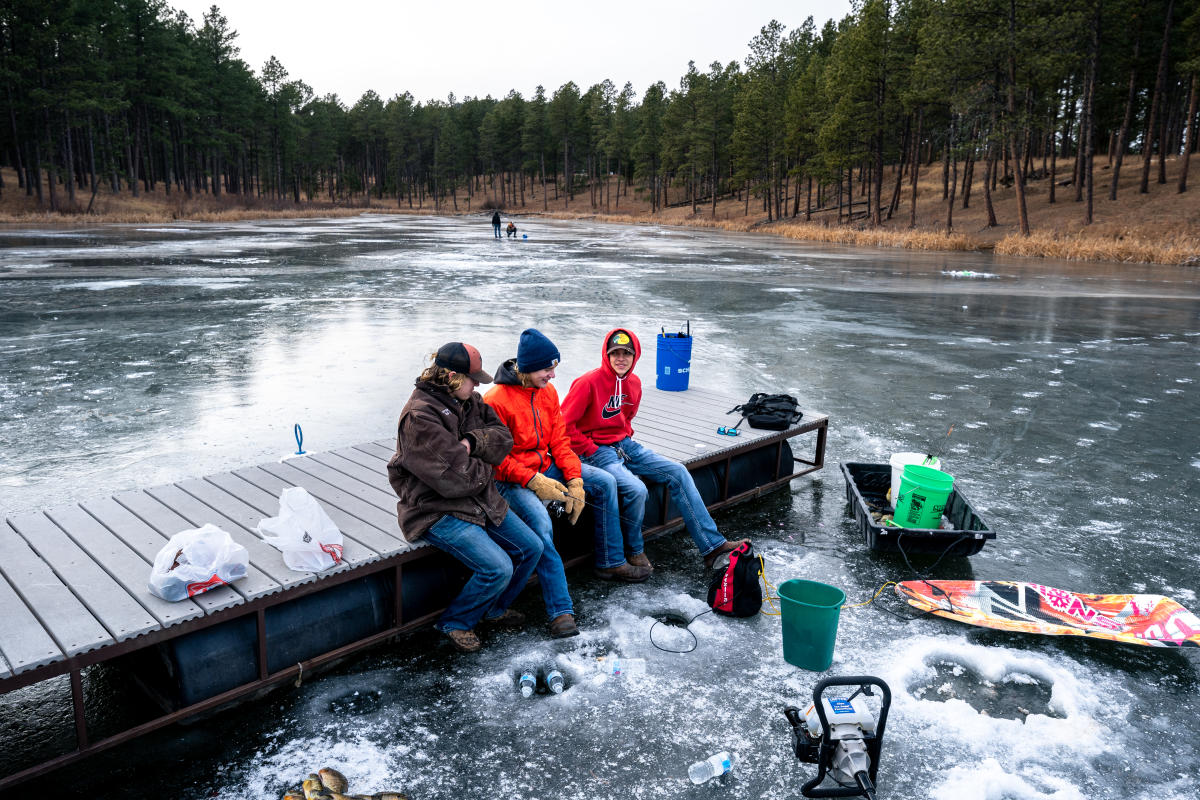
Frozen lakes greet anglers ready to swap fishing tales and reel in the big one. Popular area lakes like Sheridan Lake, Lake Pactola and Deerfield Lake are excellent to drop a line-whether you’re cozy inside a portable ice shack or basking in the winter sun on the open ice.
Here’s a fun fact: Spearfish Creek doesn’t freeze over – it heats from the bottom up – so you can fly fish year-round in Spearfish Canyon. However, you’ll want your waders! The cold water stays ice-cold even if it keeps flowing.
You do need a South Dakota fishing license before casting in a line. For fishing regulations and licensing, visit gfp.sd.gov/fish.
Fat Biking
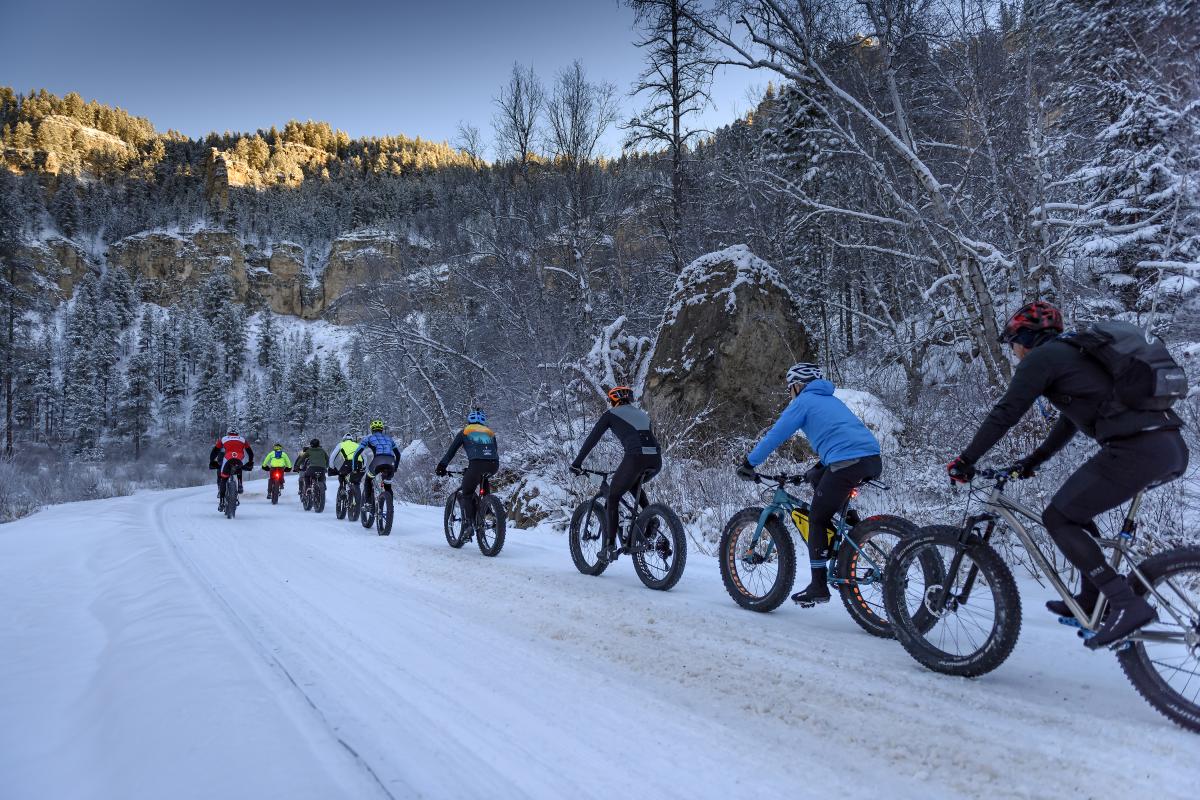
Designated trails are groomed for fat biking — snow-friendly mountain bikes with extra-wide tires that glide over packed powder. Cruise along the George S. Mickelson Trail or explore the frozen forested routes for peaceful winter riding. Big Hill Trails in the Northern Hills offers designated fat biking trails in addition to its cross-country skiing and snowshoeing trails.
Downhill Skiing and Snowboarding
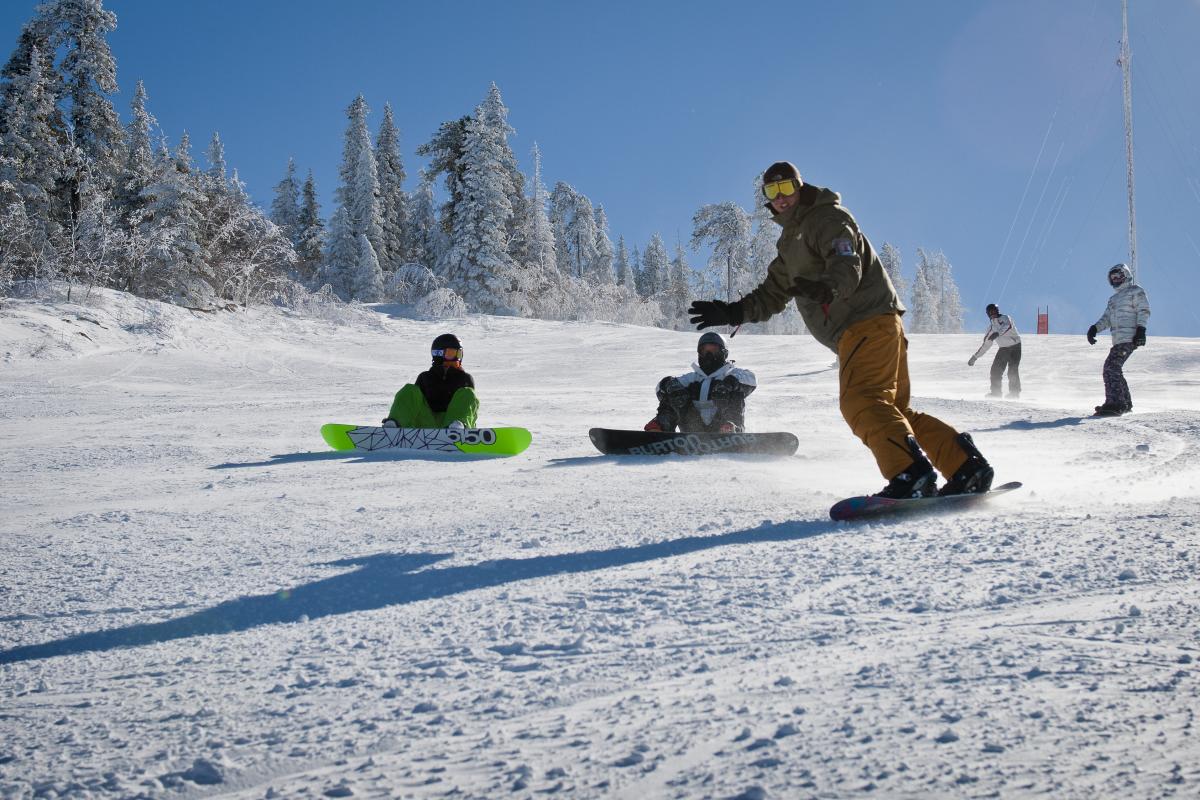
The Black Hills is home to Terry Peak Ski Resort in Lead. With more than 25 runs varying from beginner to advance, skiers and snowboarders will be guided by breathtaking panoramic views of the Hills. Two lodges offer food, drink, and a warm atmosphere to rejuvenate before heading back onto the slopes. Live entertainment is also held periodically at the lodges.
Don’t worry about packing your own gear — equipment rentals are available on site.
Ice climbing
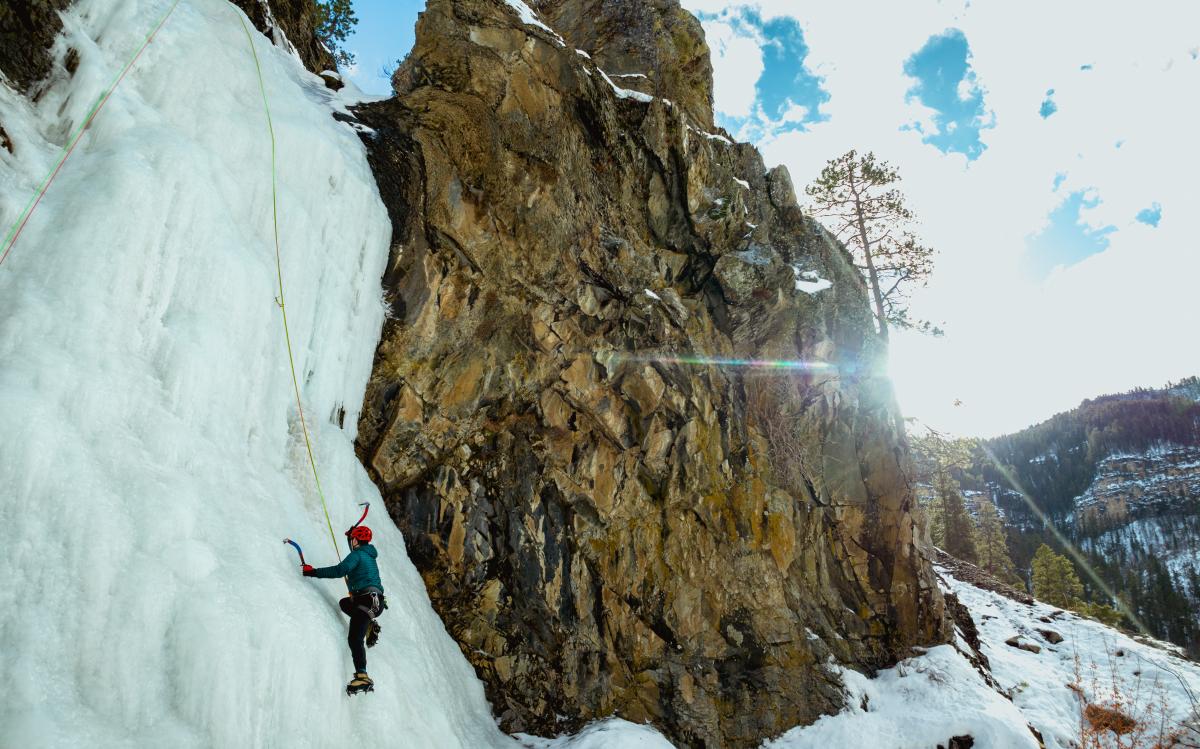
Scale frozen waterfalls for a more daring and technical winter sport. Using an ice axe and spiked boots, epic winter views await. Popular ice climbing routes are in Spearfish Canyon. We recommend Bridal Veil Falls, 11th Hour, and Community Caves. Please note: It is highly recommended to ice climb with an experienced climber if you’re new to the sport.
Gear
While winter is a thrilling time for adventure, you want to make sure you’re prepared for the cold weather. Local shops like the South Dakota Outdoor Shop in Custer provide a variety of winter-weather gear that is versatile for winter adventuring.
Here are some of our recommendations:
- Wear layers. Start with a thermal base layer to keep you warm and add other pullovers and moisture-wick jackets to ensure you’re dry. Pants should provide warmth and mobility. Start with a wool or thermal base layer and make sure your top layer is waterproof or water resistant to withstand snow and rain.
- Boots should have traction, and we recommend crampons for winter hiking and especially, ice climbing. Ice climbers also need additional gear like a helmet and ice axe, along with general climbing gear and tools.
- Poles suited for snow are helpful on icy and inclined hikes. Don’t forget a hat and gloves-and keep an extra pair of socks handy!
- And always stay hydrated. Even in the cooler temperatures, it’s important to carry an adequate water and food supply when hitting the trails.